Fault Protection
Related page, metering systems
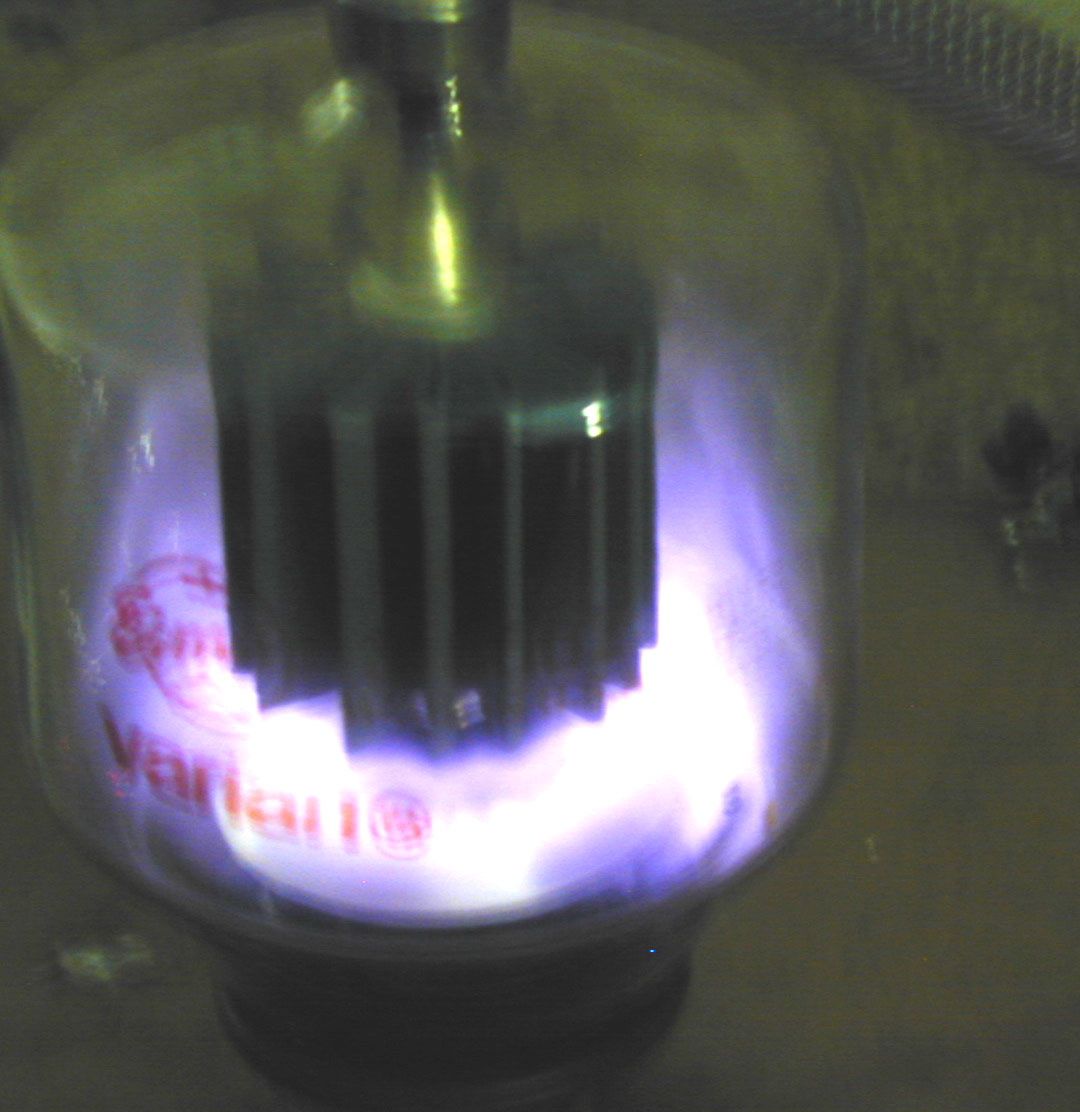
These pictures show a 3-500Z at the instant of flashover. The gas in the tube has reached breakdown and ionized. The 3-500Z is behaving like a gas discharge tube with very low resistance between anode and other elements!
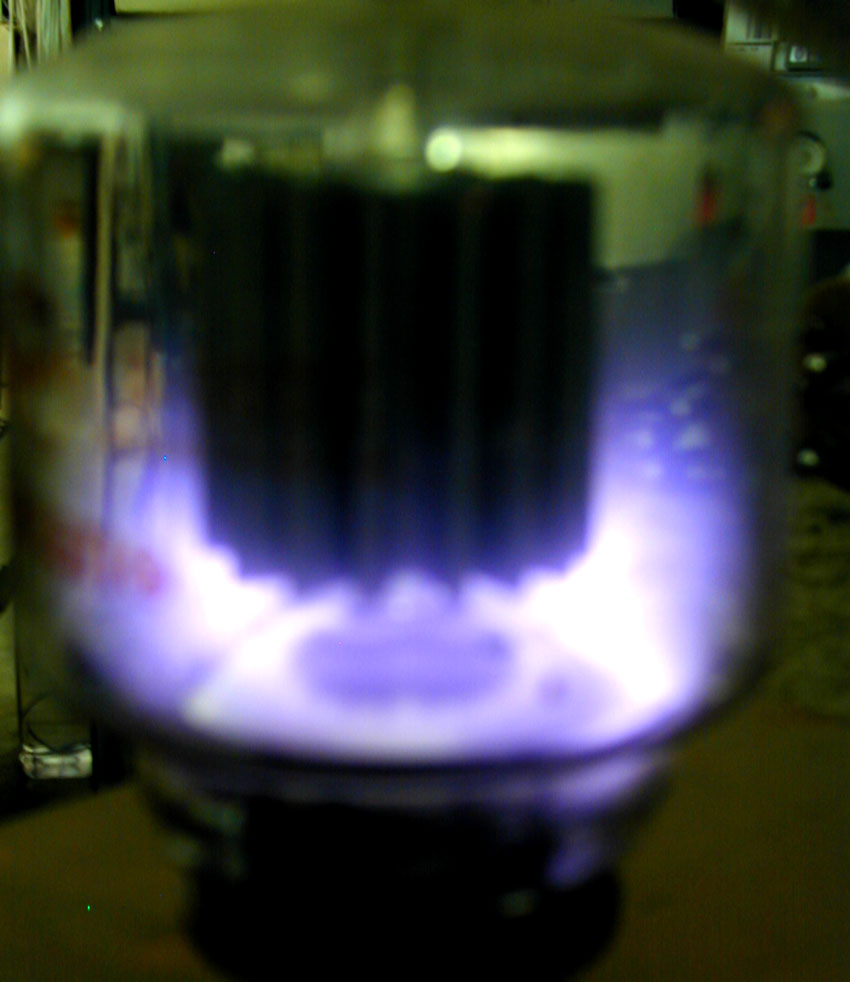
In dozens of amplifiers I've seen with 3-500Z's, the fault is primarily from anode to grid support cone. Since the area is widely distributed there often are no marks. You can see the fault is concentrated at the edges of the anode with a primary target at the edges of the grid support cone. The area under the plate is actually plasma free, as evidenced by the dark color.
This particular tube is into plasma at 7MHz at 4500 volts peak RF voltage. The primary fault path is from anode to the grid. This is not very often, if ever, caused by a parasitic. A good tube isn't any more likely to arc or fault from a "VHF event" as it is from normal low frequency signals.
This simplified circuit shows the fault paths in an HF PA:
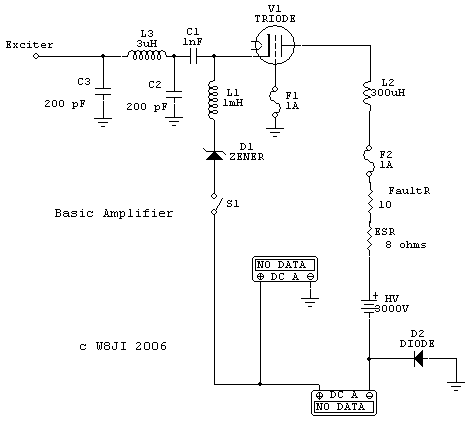
The typical fault path is from anode supply through the RF plate choke, from the tube anode to grid, to the chassis, and back through the grid and plate current metering to the negative rail. D2 is a negative rail clamp. D2 protects the meters. It limits the negative rail to chassis voltage to about 1 volt under surge conditions.
Note that only one diode is required, and the best place for that diode is from the negative rail to the chassis. It actually is more effective to place the diode there than it is at the meters.
The grid, being directly between the anode and cathode, shields the filament-cathode from the anode. Very little cathode fault current flows unless the grid is floated on resistors, chokes, or fuses. F1 in the grid is actually a very bad idea.
Arc current is limited by the resistance and impedance of L2, the fault protection resistor, the filter capacitor series resistance, and the impedance of the power supply negative-rail-to-chassis resistance.
Typical path resistance would be about 10-12 ohms without the fault resistor, and 20-22 ohms with it. There is also additional resistance inside the tube.
If the high voltage was 3000 volts, typical fault current would be under 150 amperes with a fault protection resistor included, and 100 amperes with the additional 10 ohms.
| About F1. Some articles
suggest adding F1, either in the form of a grid resistor or fuse. F1 is
a terrible idea! The grid should be connected to ground at all times. About glitch resistors in general. Glitch resistors shoould always be in the high voltage line, and preferably near the filter capacitors. They should be high voltage type resistors capable of absorbing considerable energy without failing or arc. Suitable resistors are RCD 175P pulse rated resistors, or glow-bar type resistors that are physically very long. Some high power wire wound resistors will work, although generally most are not suitable. |
If grid fuse F1 opens before supply voltage dumps, we have:
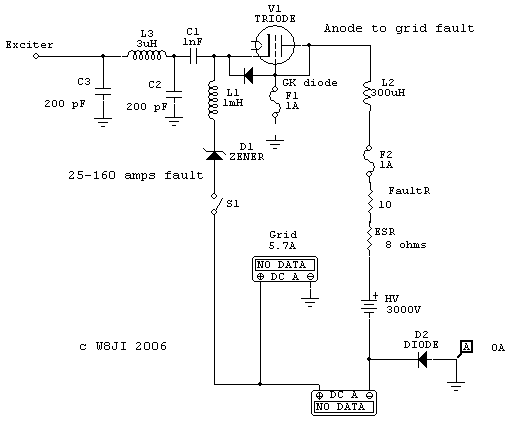
The GK diode (inside tube) turns fully on. If cathode saturation current is exceeded the grid-cathode voltage will rise to a value that causes the grid to arc to the cathode. Either way, all the HV dumps through the grid to the cathode instead of F1.
The danger of this is the exciter, if connected, receives a transient that may be hundreds of volts. The very sharp rise time of the arc means we essentially are running a spark transmitter backwards into the radio. D2 is no longer in the arc path of the circuit, and so the plate meter is exposed to the full fault current.
Instead of losing F2 or D2, we now greatly increase the risk of damaging:
1.) The exciter
2.) D1, the cathode bias system
3.) The tuned input system capacitors
4.) The plate current meter
The tube still has just as much surge current at the arc strike, but now has a sustained arc at lower current until some other device having enough hold-off voltage to quench the arc opens. This is why grids should NEVER be fused.
D2, negative rail clamp, is removed:
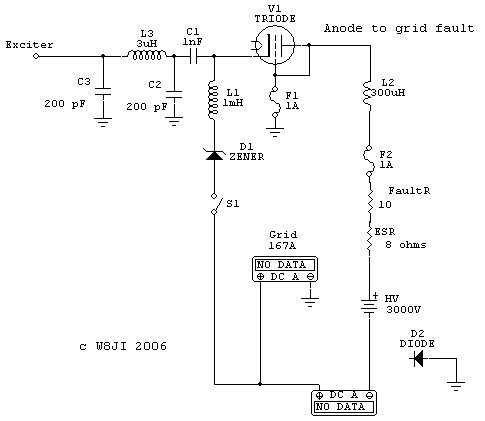
If the tube had a perfect zero-resistance fault, not likely to happen unless the grid touches the anode, the grid meter would try to move reads backward with less than 167 amperes flowing through the grid shunt. The plate meter would try to read forward with less than 167 amperes flowing through the plate meter shunt.
This is why D2 is necessary to prevent meter or shunt damage.
Adding rail clamp D2, we have:
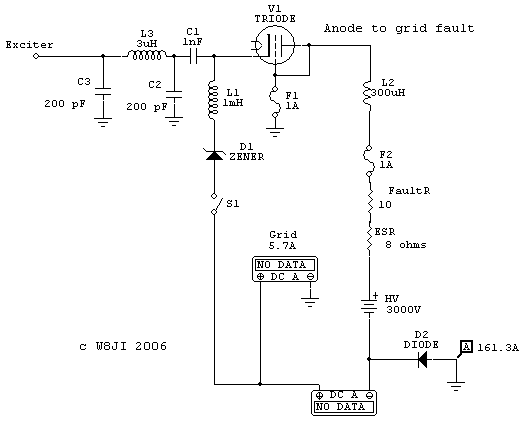
Adding D2, even with a severe short, nearly all of the fault current flows through D2.
In this case we have 161 amperes flowing through D2 and 5.7A through the plate and grid meter shunts. 167 amperes flows from the grid through F1.
Related page, cathode fuse resistors
Return to fuses and grids page