RF Noise Powerstroke Diesel


|
RF Noise Powerstroke Diesel
|
|
Related pages: mobile antennas Loading coils Field Strength Measurements
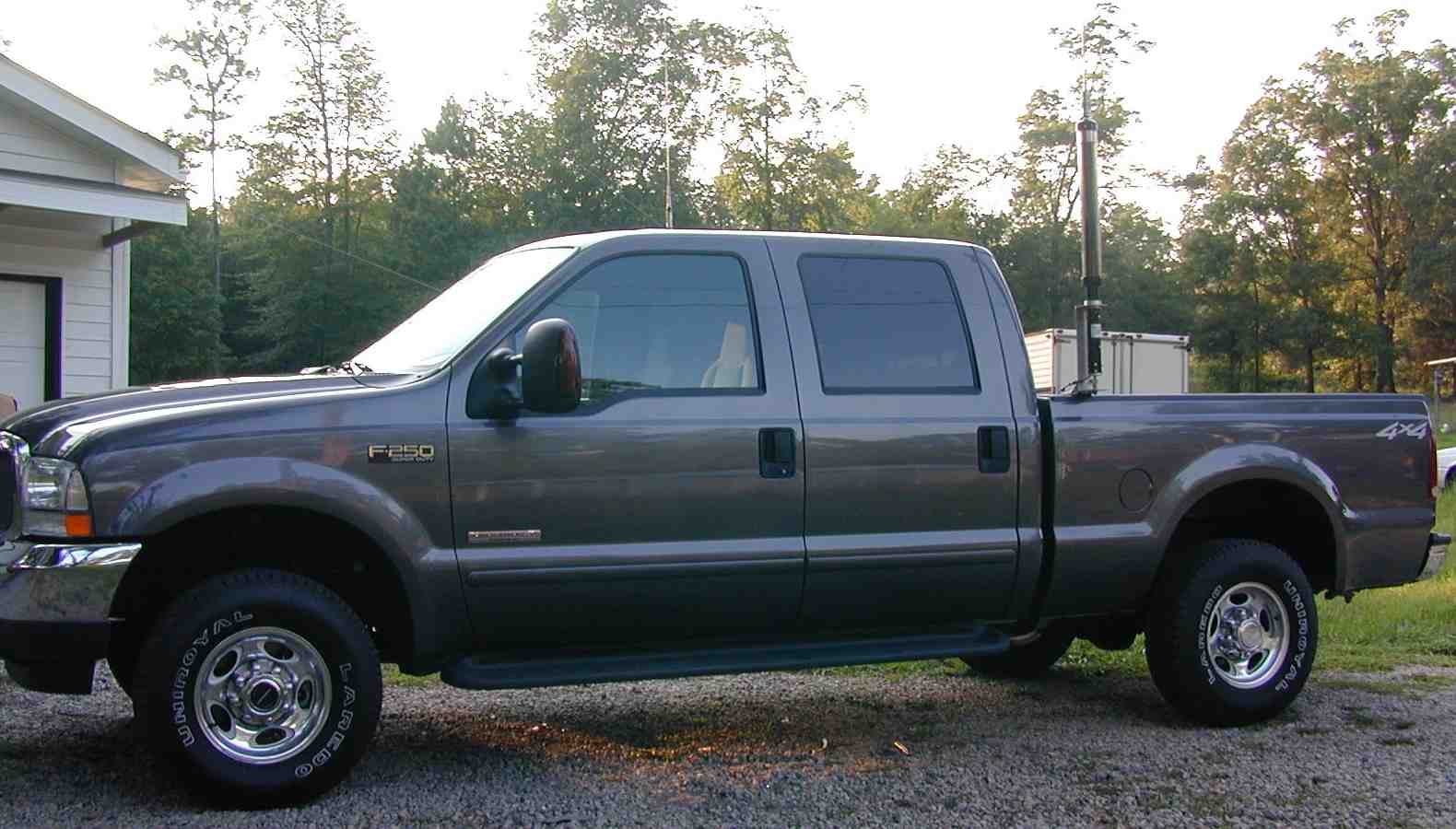
RFI measurements showed HF noise at a distance of 5 meters from my 2003 Power Stroke was 15-20dB less than my 1995 F-250. I never could get all the noise out of my 7.3L 1995 F-250 HD PSD. The measurements of noise field a small distance from the new 2003 truck gave me great hope I could have a better HF mobile with minimal work. I am delighted to report my 2003 F-250HD PowerStroke diesel has virtually no RFI with only very simple and fast corrections. Be aware this is for my antenna mounting location, and my style of truck.
Antenna Mounting LocationI mounted the antenna in the stake hole of the bed that is located just behind the cab on the driver's side. I use this location because:
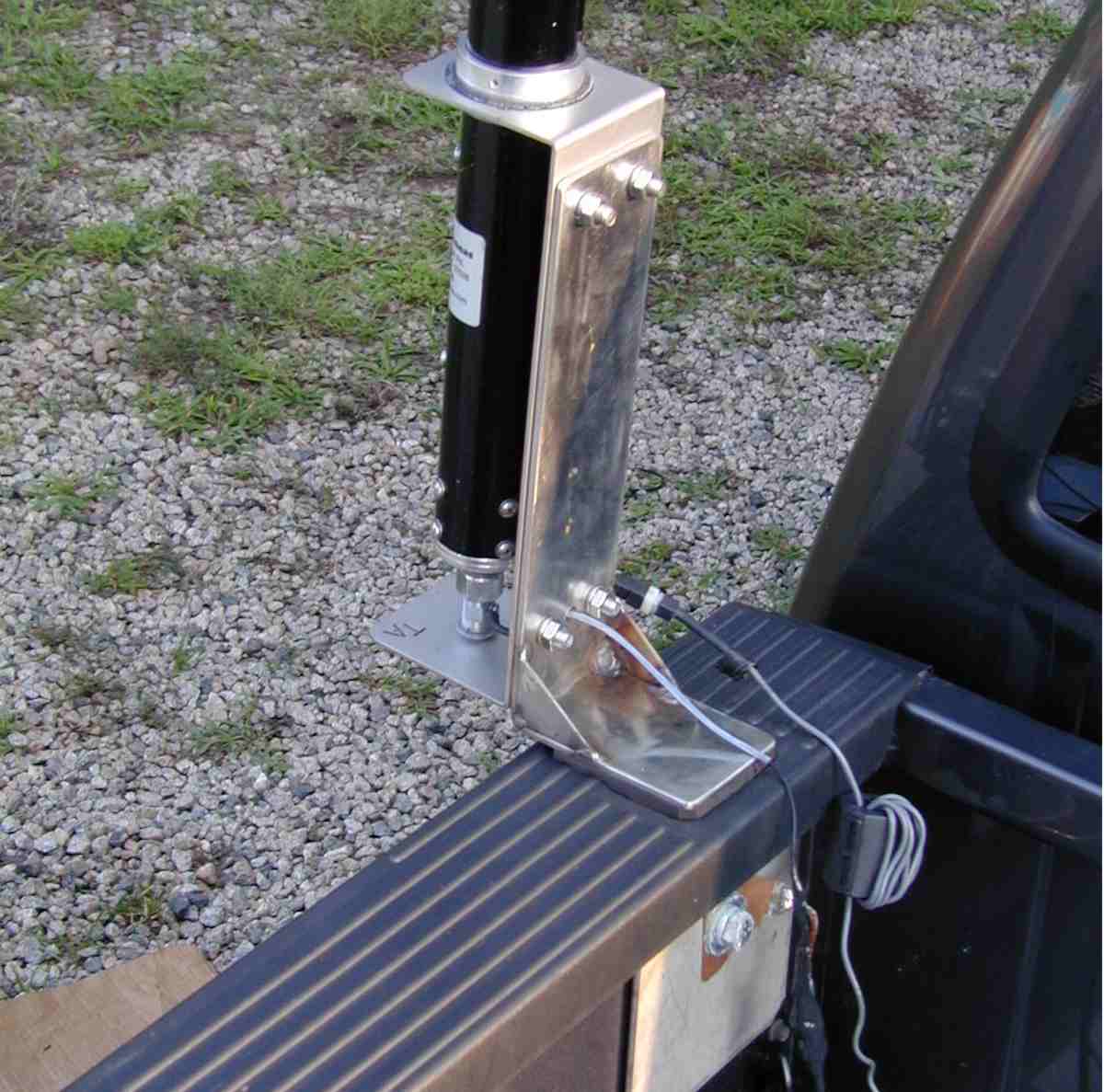
Antenna MountMy antenna mount is home made. It is formed from a scrap sheet of stainless steel that looked to be about 7 gauge. In order to make the mount, I went though the following process:
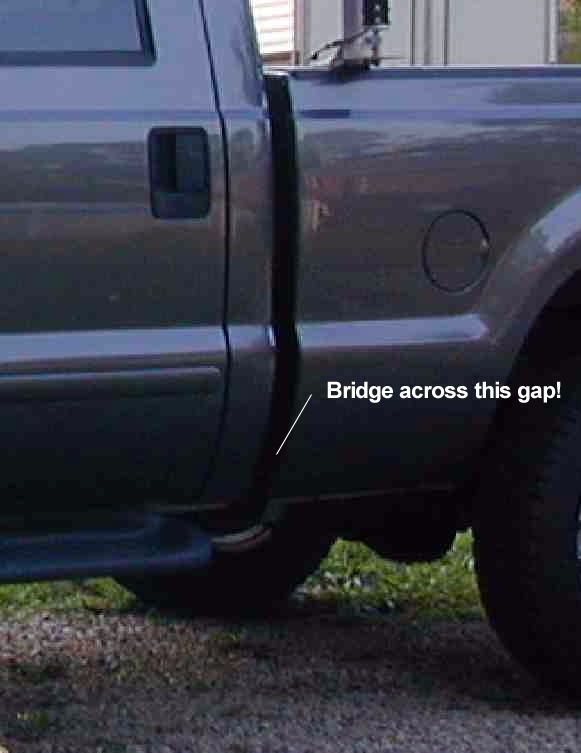
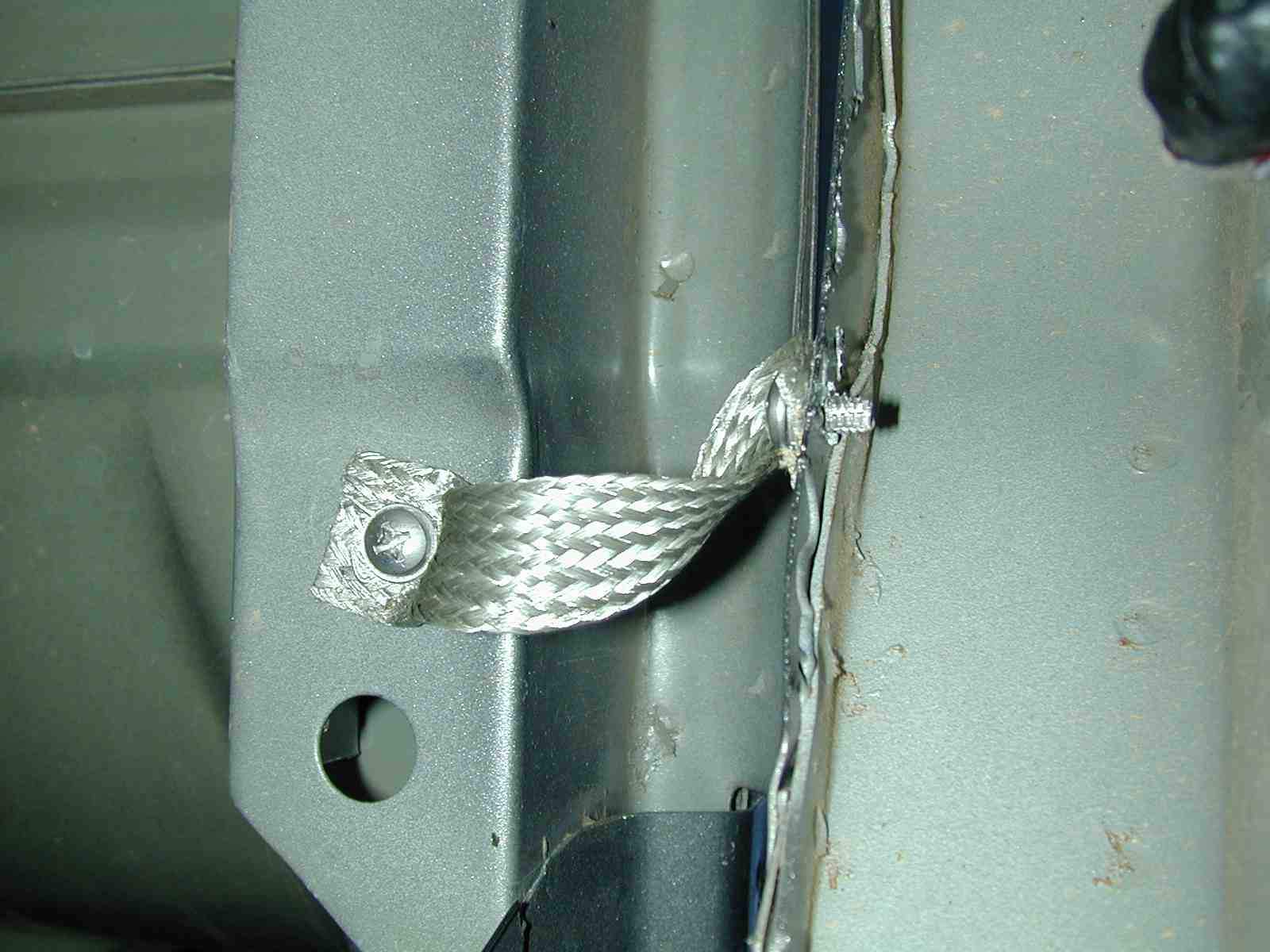
You can see where I get my shield ground connection under the single mounting bolt. I feed the antenna with the single clear insulated wire that goes through a hole in the mount. That wire attaches to the lug normally used to mount the little impedance correction coil on the Tar Heel antenna. I mount my impedance correction coils on PL-259 plugs so I can change them easily. I screw them into the SO-239 connector normally used as a feed! Noise Noise NoiseI always thought a diesel would be quiet for electrical noises. When the antenna was installed, I had S-7 injector noise on my IC-706. I also had interference into the EEC (electronic engine control). The fuel injection system has solenoids that, when they open, create a very high voltage pulse. When the EEC (electronic engine control) opens the solenoids, the spike is many hundreds of volts. This in normal back-pulse that occurs in any inductor, relay, or solenoid when the holding or coil operating current is removed. When the EEC opens the circuit for an injector solenoid, all the energy stored in the magnetic field of that solenoid coil is released at once. This makes a very sharp rise time high voltage pulse that is directly coupled into the injector harness. The Ford harness has a shield inside, but the shield is mostly useless. It is grounded only at the EEC, so it really doesn't shield anything very well. It probably minimally serves some purpose, but is ineffective at suppressing radio signals. One might think we can eliminate the pulse. Normally we would clamp a spike like that with diodes, or an R/C snubbing network. I was afraid to try that because anything that clamps or snubs the pulse will also slow the release time of the electromagnetic device. This would increase the on-time of the injector control coils. A capacitor would also increase the turn-on pulse current of the devices driving the injector control lines. I just didn't want to experiment with anything that could damage the EEC. I did do a modification I used in my 1995 F250 7.3 L Powerstroke. I ran a small tinned buss wire against the aluminum foil shield in the injector harness, and wrapped it to hold it against the shield. I then grounded the shields at multiple points. In my 1995, this was enough to cure radio noise. I cured all the RFI problems in my 2003 with the above, and the following actions: I removed the Tar-heel motor line choke bead because impedance was far too low. The stock choke was so small the motor lead was receiving signals and noise, and the motor control lead was bringing RF and noise back into the cab. I used my own jumbo-size 44 mix bead with lots of turns. You can see it in the picture. I also ran well-grounded shielded control wire from the exit point of the bed into the cab. You will probably find most frame-type vehicles mount passenger compartments on rubber mounts to reduce noise and vibration. The cab is only grounded at one or two points. The bed is bolted solidly to the frame, and this means all RF currents must travel down the bed to the frame, follow the frame forward to the front of the cab, flow back along the cab towards the antenna. This actually makes a very short thick antenna or transmission line out of the truck frame and cab of the truck! Antenna ground currents excite all the wiring under the vehicle, increase ground losses in the antenna system, and increase noise ingress from truck wiring back into the radio system. To cure common mode RF problems, I added a ground strap between the bed and the cab.
You can make the connection UNDER the chassis at the locations shown in the following picture:
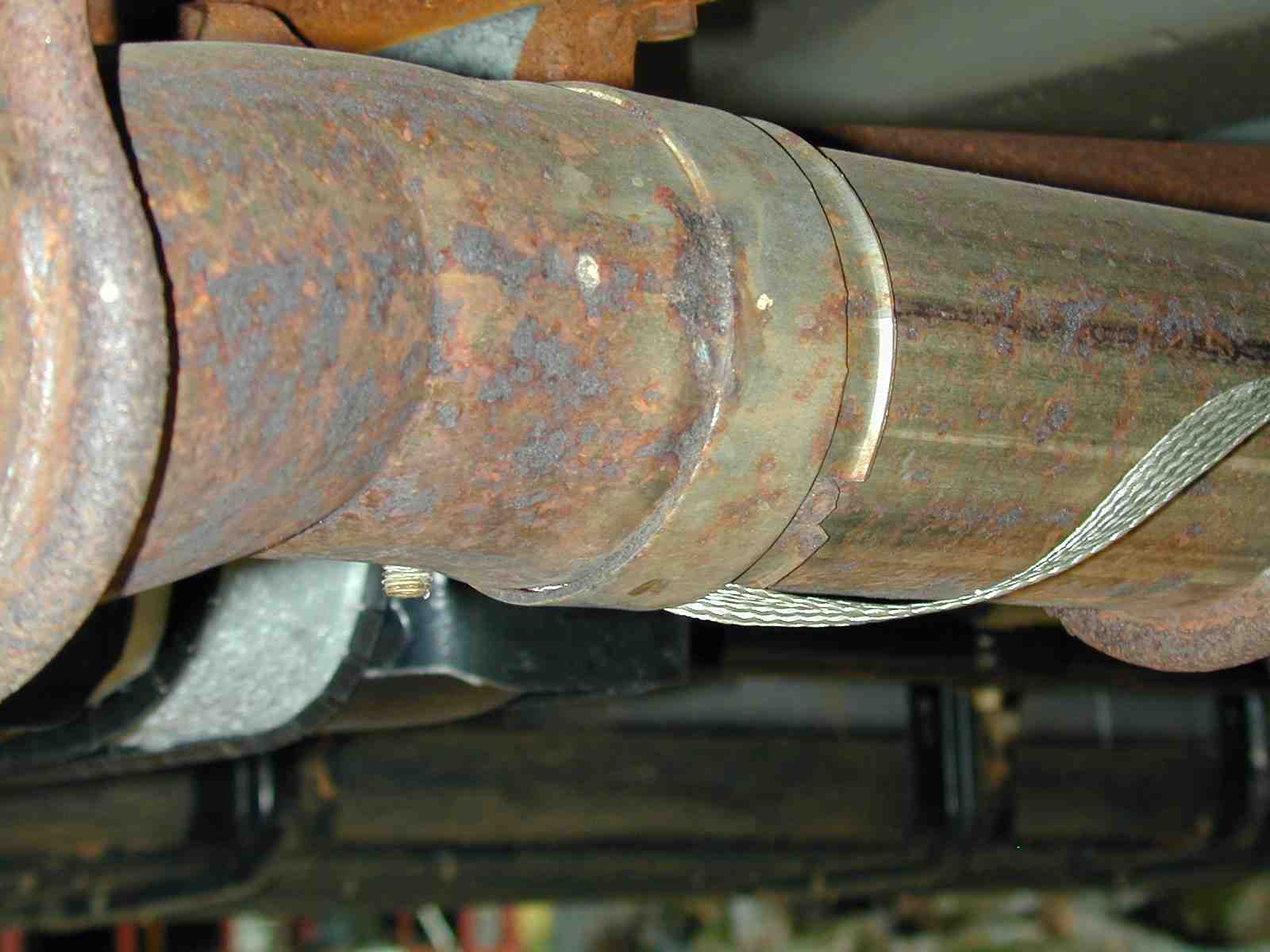
Note that I heavily tin the edges of the 1" braid. I do this insure all of the braided wires stay fully in contact all of the time. The flex area must remain solder free. I use stainless thread-cutting (self-tapping) fine thread (1/4-20) screws. To punch through the paint I used stainless external tooth star washers under the braid in the tinned area. Stainless prevents corrosion or interaction with the solder on the braid. Adding this single strap made the following changes: The base resistance of the antenna dropped from 45 ohms to 25 ohms on 7 MHz. This means the grounding substantially reduced undesired radiation from the truck's body and frame. Noise levels dropped 2-3 S units RF in truck wiring dropped substantially, I no longer saw gauges move or had rough idle when transmitting (even with over a kilowatt!). Remaining NoiseA small amount of noise remained audible after the grounding. I traced this noise to radiation from the exhaust system. The engine block was hot with RF, the injector control modules are mounted on the block and have leads that exit the engine and connect to other wiring. This lets the injector module "push" RF against the wiring in the truck, making the poorly grounded engine block pump up and down with injector high voltage pulses. Since the exhaust system bolts to the engine with a direct conductive path through the turbocharger, the tailpipe is actually excited just like an antenna. The opposite is also true, the tailpipe can act like an antenna and excite the sensitive Electronic Engine Controls. I cured ALL of the remaining noise with the addition of one more ground strap between the exhaust and the frame just ahead of the muffler.
You can see the widening of the pipe as it expands into the muffler of the Power Stroke, the fuel tank and transfer case are in the background. The new ground strap attaches to the body under a nut used for the exhaust hanger. As before, I tinned the braid ends and used stainless star washers to help maintain connections and to prevent direct contact between the tinned strap and the steel body. I clamped the exhaust end of the flexible strap under the factory exhaust joint clamp. This is a stainless steel exhaust system with stainless U bolts.
I now have absolutely no noise at all from the diesel engine on any band, and transmitter RF stays out of my engine controls...even at the kilowatt level.
©2004 W8JI |